Behavioral Data Shaping Incentive Structures Across Wireless Interactive Platforms
Written by Leon Reed · Aug 16, 2026
Behavioral Data Shaping Incentive Structures Across Wireless Interactive Platforms
Wireless interactive platforms collect behavioral data through user interactions on mobile devices, and this information directly informs the design of layered incentive systems that adjust rewards based on observed patterns. Researchers track metrics such as session duration, navigation paths, and response times to build profiles that trigger specific incentive tiers, ranging from basic access unlocks to advanced personalized offers. Data indicates that platforms operating in August 2026 continue to refine these mechanisms as device connectivity improves and user volumes expand globally.
Collection and Processing of Behavioral Signals
Platforms gather signals from touch interactions, location data, and engagement frequency, then process them through algorithms that identify preferences and predict future actions. Studies from academic institutions show that combining these inputs allows systems to segment users into groups where incentives escalate automatically once certain behavioral thresholds are met. Observers note that this process occurs in real time across wireless networks, enabling adjustments without manual intervention from developers.
Wireless carriers and app operators apply machine learning models to filter noise from raw data streams, focusing on consistent patterns that correlate with retention rates. Evidence from industry reports reveals that platforms in regions including North America and Europe integrate these models to create multi-stage reward pathways, where initial incentives lead to deeper engagement layers once users demonstrate sustained activity. Those who analyze platform architectures find that data pipelines often connect directly to incentive engines, reducing latency between observation and reward delivery.
Layered Incentive Mechanisms Driven by Data Insights
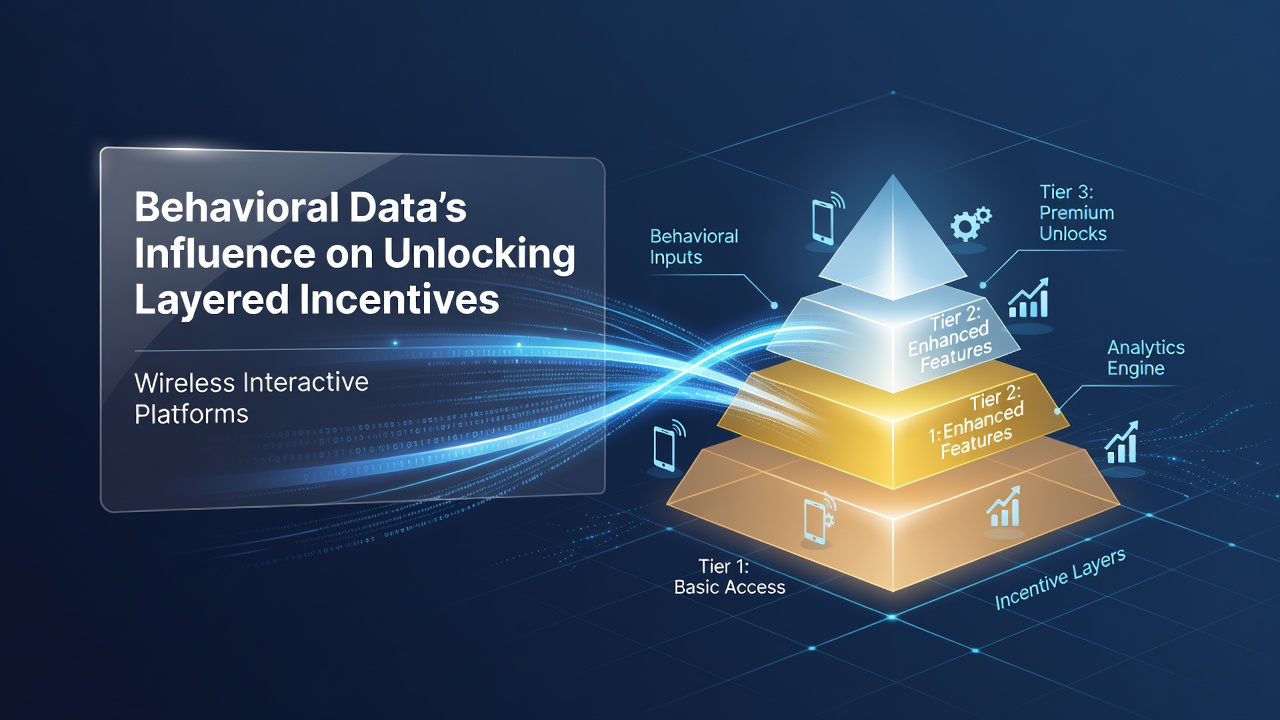
Layered incentives function through progressive stages where each level unlocks based on accumulated behavioral evidence rather than static criteria. For instance, a user who frequently completes short tasks may receive accelerated access to mid-tier features, while those exhibiting exploratory behavior gain entry to premium content segments. Research indicates that this structure relies on continuous data updates, ensuring that incentives remain aligned with individual trajectories observed over weeks or months.

Platform operators deploy A/B testing frameworks to validate which data-derived triggers produce higher completion rates across different incentive layers. Figures from regulatory filings in Australia and Canada demonstrate measurable shifts in user progression when behavioral thresholds replace generic reward schedules. Experts have observed that wireless platforms in competitive markets use these tests to fine-tune the spacing between layers, preventing overload while maintaining forward momentum for participants.
Regional Variations and Regulatory Contexts
Approaches differ by jurisdiction, with bodies such as the Federal Communications Commission in the United States monitoring data practices that affect incentive transparency on wireless networks. In contrast, Canadian regulatory reviews emphasize consent mechanisms that govern how behavioral profiles feed into reward systems. Data from these sources shows that platforms adjust incentive visibility accordingly, presenting clearer disclosures in regions with stricter oversight.
Academic papers from European universities highlight how cross-border data flows influence incentive consistency for users moving between wireless environments. Those who examine compliance records note that operators often maintain separate processing rules per region, resulting in incentive layers that adapt not only to behavior but also to local requirements. As of August 2026, updated guidelines in several markets continue to shape these adaptations without disrupting core data-to-incentive linkages.
Technical Integration and Future Projections
Integration occurs through APIs that link analytics dashboards directly to incentive servers, allowing behavioral scores to update reward eligibility instantaneously. Industry analyses reveal that 5G deployment accelerates this integration by supporting higher data throughput, which in turn permits more granular tracking and faster layer transitions. Projections for late 2026 suggest expanded use of edge computing to handle incentive calculations closer to the device, reducing reliance on centralized servers.
Wireless interactive platforms also incorporate feedback loops where post-reward behavior informs subsequent adjustments, creating self-optimizing systems. Reports from telecommunications research groups indicate steady growth in such closed-loop designs, particularly in entertainment and productivity applications that operate across multiple device types. Observers note that this evolution supports incentive layers that scale with user maturity on the platform.
Conclusion
Behavioral data continues to serve as the primary driver for unlocking layered incentives within wireless interactive platforms, with processing techniques evolving alongside network capabilities. Regional regulatory frameworks guide implementation details while technical advancements enable more responsive systems. Data collected through August 2026 and beyond will likely refine these connections further, maintaining alignment between observed actions and reward structures across diverse wireless environments.