Indiana's Electronic Pull Tabs Generate $75.6 Million in First Three Months, Fueling Charitable Causes

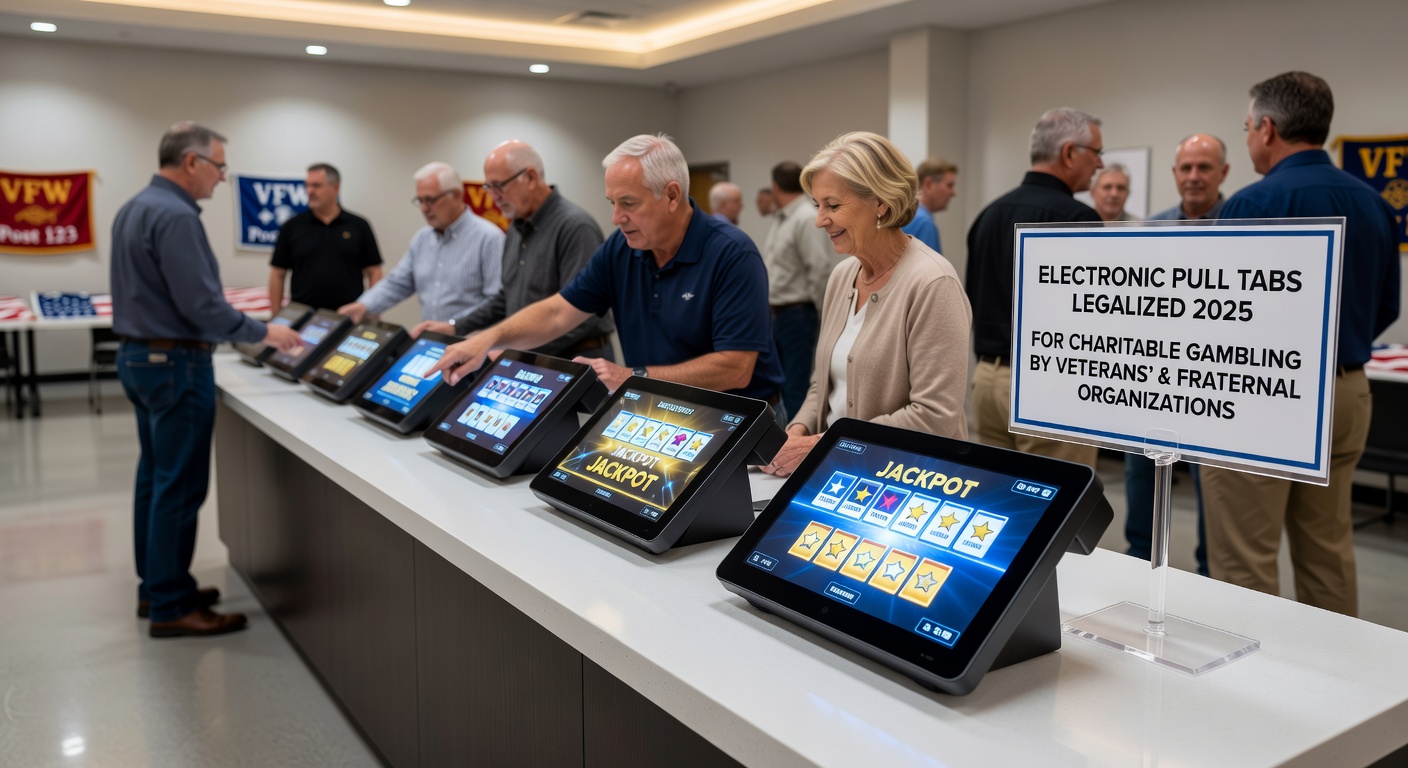
Electronic pull tabs, legalized in 2025 specifically for charitable gambling by veterans’ and fraternal organizations across Indiana, have made a swift impact since their launch on December 30, 2025; figures reveal they pulled in about $75.6 million in gross revenue during those initial three months, a development observers in the gaming sector have closely tracked into April 2026.
The Rollout and Rapid Adoption
Organizations eligible to participate numbered 581 statewide, yet 518 of them jumped on board almost immediately, installing nearly 2,800 devices in venues from American Legion posts to fraternal halls; this high uptake rate underscores how quickly these groups embraced the technology, which mimics traditional paper pull tabs but in a digital format designed for faster play and higher engagement.
Take one veterans’ group in a mid-sized Indiana city, where leaders installed a cluster of machines right after the new year; such examples highlight the practical rollout, as devices appeared in bars, clubs, and dedicated gaming areas licensed for charitable purposes, all while adhering to strict state guidelines that limit play to adults 18 and older.
And here's where it gets interesting: although not every eligible entity dove in—63 held back for reasons ranging from logistical hurdles to cautious approaches—the sheer volume of installations shows broad enthusiasm among those who did, with devices linking to centralized systems for real-time reporting and oversight.
Revenue Streams and Charitable Allocations
Gross revenues hit that $75.6 million mark by late March 2026, according to data from the Indiana Capital Chronicle, with funds earmarked to support a range of vital needs; organizations direct proceeds toward operational costs like utilities and staffing, community distributions such as scholarships and food pantries, and facility repairs including roof fixes or HVAC upgrades in aging halls.
What's notable is the multiplier effect here, since every dollar generated stays local and bolsters nonprofits that have long relied on paper pull tabs, now amplified by electronic versions that allow continuous play without the waste of physical tickets; researchers who study charitable gaming point out similar transitions in other states have boosted net proceeds by 20-30%, although Indiana's full data awaits compilation.
Devices operate on player-paid credits, typically $0.50 to $5 per tab, yielding instant wins from small prizes up to jackpots in the thousands, and while gross figures capture total wagers, net charitable contributions emerge after excise taxes and vendor fees—details the state continues to audit as reports roll in during April 2026.
Regulatory Oversight by the Indiana Gaming Commission
The Indiana Gaming Commission stands at the helm, regulating every aspect from device certification to revenue tracking, while collecting excise taxes that fund state programs alongside the charities; commission staff approved vendors and conducted pre-launch inspections, ensuring machines meet technical standards for fairness, including random number generators verified by independent labs.
So far, compliance appears strong, with daily uploads of play data to state servers allowing real-time monitoring for anomalies, although full financial assessments from the 518 adopting organizations remain pending as of April 10, 2026—those reports will detail exact net proceeds once reconciled against costs.
Experts who've followed Indiana's gaming evolution note the commission's role extends to player protections, like mandatory breaks in play sessions and limits on daily spends per patron, measures that keep the focus squarely on charitable intent rather than commercial excess; violations trigger swift audits or shutdowns, a framework that's kept operations smooth in these early months.
Broader Context of Legalization and Early Trends
Legalization came via 2025 legislation targeting veterans’ and fraternal groups, expanding from paper pull tabs that had generated millions annually but hit limits on volume and convenience; electronic versions arrived with fanfare on December 30, 2025, coinciding with post-holiday gatherings where crowds tested the new tech, leading to that explosive $75.6 million start.
Turns out the timing worked perfectly, as winter months brought steady foot traffic to halls hosting fish fries, bingo nights, and now pull tab terminals; one study of comparable programs in Minnesota and Iowa—states with years of electronic pull tab experience—found average monthly revenues per device hovering around $25,000, aligning with Indiana's trajectory when scaled across 2,800 units.
But the reality is more nuanced, since adoption varied by region: urban areas like Indianapolis and Fort Wayne saw denser installations, while rural counties ramped up slower, reflecting differences in venue sizes and member bases; observers track these patterns closely, anticipating quarterly reports that could reveal per-organization averages exceeding $100,000 in some cases.
Impacts on Veterans and Fraternal Organizations
For the 518 adopters, revenues have already translated into tangible gains—facility repairs patched leaky roofs before spring rains, operational budgets covered rising insurance premiums, and community distributions reached local families through holiday aid programs extended into 2026; such outcomes align with the charitable mission, where pull tabs have historically funded 70-80% of some groups' budgets.
People who've studied these organizations emphasize the lifeline aspect, especially for veterans’ posts facing membership declines and maintenance backlogs; electronic pull tabs offer a modern twist, drawing younger players via flashy interfaces while preserving the social vibe of communal gaming.
Yet challenges persist, including training staff on new systems and educating patrons on digital play, although early feedback suggests quick adaptation; the Indiana Gaming Commission's ongoing collections of excise taxes—pegged at percentages of gross revenue—further ensure public accountability without derailing charitable flows.
Looking Ahead: Full Assessments and Sustained Growth
As April 2026 unfolds, the commission awaits those comprehensive financial reports from organizations, which will clarify net charitable contributions after deductions and provide benchmarks for future quarters; preliminary data hints at sustained momentum, with device counts potentially climbing as the remaining 63 entities weigh in.
Here's the thing: if the first three months set the pace, annual projections could top $300 million in gross revenue, rivaling other charitable gaming sectors like bingo; states with mature electronic pull tab markets report year-over-year growth of 10-15%, a trend Indiana might mirror given the strong debut.
Regulators plan enhanced analytics too, tracking player demographics and win rates to refine policies, while organizations invest in expansions like linked progressive jackpots to boost appeal; all this positions electronic pull tabs as a cornerstone for Indiana's charitable landscape moving forward.
Conclusion
Electronic pull tabs have stormed onto Indiana's charitable gaming scene, delivering $75.6 million in gross revenue from December 30, 2025, through March 2026 via 2,800 devices in 518 of 581 eligible veterans’ and fraternal organizations; under Indiana Gaming Commission oversight, these funds propel operations, repairs, and community aid, with full assessments pending to illuminate long-term impacts—data that promises to shape this evolving story well into 2026 and beyond.